Security Guard Pricing: How to Set Your Hourly Bill Rate
Pricing too low kills margins. Pricing too high loses contracts. This guide covers cost-plus pricing, market-rate analysis, and how to calculate profitable bill rates.


Pricing security services is where many companies either build profitable operations or slowly bleed themselves dry. The math seems simple—charge more than it costs—but the reality is complicated by competitive pressure, client expectations, and the frequent failure to understand true costs. Companies that price strategically thrive; those that chase every contract at any price struggle to survive.
Calculate true costs (wages, burden, overhead, margin) before setting prices. Bill rates should be 1.4-1.6x pay rates minimum. Differentiate on value, not just price. Understand your breakeven and walk away from unprofitable contracts.
The True Cost of Security Service
Most security company owners can tell you what they pay their guards. Far fewer can tell you what each billed hour actually costs them—and that gap between perceived cost and actual cost is where profitability dies. Understanding your true costs requires accounting for everything that happens beyond the guard's base wage.
Direct labor is just the starting point. When you pay a guard $15 per hour, that's the beginning of your costs, not the end. Payroll taxes add roughly 7.65% immediately. Workers' compensation insurance in security—a high-risk classification—typically runs 5-15% of wages depending on your state and claims history. If you offer any benefits, those add more. Collectively, these burden costs typically add 25-35% to base wages.
Overhead encompasses everything else it takes to run your operation. Office space, management salaries, general liability insurance, equipment, software, vehicles, uniforms, recruiting costs, training time—all of these must be covered by your bill rates. Overhead varies dramatically by company size and efficiency, but ignoring it is a recipe for unprofitability.
Margin is what's left after all costs—the profit that allows your business to invest, grow, and survive inevitable setbacks. Companies that price to break even are one bad month away from crisis. Sustainable pricing includes margin that builds reserves and funds growth.
Example: A guard paid $15/hour costs you approximately $15 + $4.50 (burden at 30%) + $2.50 (overhead allocation) = $22/hour before any profit. If you're billing $20/hour for that guard, you're losing $2 on every hour they work. You cannot make up losses on volume.
Where Your Money Goes
Understanding the breakdown of costs in a typical security operation helps explain why bill rates must be substantially higher than pay rates. The visual breakdown below shows where each dollar of revenue typically flows:
Security Company Cost Structure
Typical expense breakdown for contract security operations
Margin reality: With 70% labor costs and 5% margins, a 10% reduction in overtime directly adds 1-2 percentage points to net profit.
Pricing Models and When to Use Them
How you structure pricing affects both your profitability and your client relationships. Different situations call for different approaches.
Hourly billing is the industry standard and the simplest model to manage. You bill for hours worked, clients pay for hours received, and the relationship is straightforward. The key discipline is maintaining bill rates that cover your true costs plus margin. A minimum multiplier of 1.4x pay rate keeps you solvent; 1.5-1.6x provides healthier margins that allow for quality and growth. Premium services—armed guards, specialized training, technology-enabled verification—justify higher multipliers.
Fixed monthly contracts provide revenue predictability but require careful scoping. Calculate total expected hours, multiply by your hourly rate, then add buffer for the reality that coverage always costs more than the minimum calculation suggests. Overtime from call-outs, supervisor site visits, training time, and administrative overhead all eat into fixed-price contracts. Build these costs into your pricing or watch your margins erode.
Per-service pricing makes sense for discrete services where value delivered matters more than time spent. Event security, alarm response, security assessments—these can be priced based on what they're worth to the client rather than strictly on hours involved. A four-hour event where you deploy eight guards might justify pricing based on the event's value rather than 32 hours times your standard rate.
Variables That Should Affect Your Pricing
Not all hours are created equal. A daytime lobby guard position is a different product than an overnight armed patrol in a high-crime area. Your pricing should reflect these differences rather than applying a single rate to all services.
Service type creates the most obvious pricing tiers. Armed security commands a premium over unarmed—the additional training, licensing, insurance, and risk warrant higher rates. Specialized services like executive protection, K-9 units, or technical security specialists justify further premiums based on the expertise required.
Shift timing affects your costs and should affect your pricing. Overnight and weekend shifts are harder to staff and often require premium pay to attract workers. If you're paying shift differentials, your bill rates should include shift differentials too. Clients who want 24/7 coverage should expect different rates for different shifts.
Location matters for both cost and risk. Remote sites require more travel time and may have limited backup options. Urban sites in high-crime areas carry elevated risk that should be reflected in pricing. Sites with difficult parking, poor facilities, or challenging working conditions make it harder to retain staff—factor that churn cost into your rates.
Volume can justify volume discounts—but only to a point. Large contracts that fill your capacity efficiently may warrant slightly lower margins per hour because they reduce your sales and administrative costs. But discounting below your cost-plus-minimum-margin threshold just to win volume is a path to bankruptcy.
Competing on Value Instead of Price
The security industry's race to the bottom on pricing has devastated both service quality and company profitability. When clients choose the lowest bidder, they often get unreliable coverage, high turnover, and guards who show up but don't perform. The companies that thrive are those that break out of price competition by offering demonstrable value that justifies premium pricing.
Professional appearance and training signal quality before guards even perform their duties. Crisp uniforms, well-groomed officers, and evident professionalism tell clients they're getting something different from the lowest bidder. Training documentation that exceeds minimum requirements provides tangible evidence of investment in quality.
Reliability differentiates more than almost anything else. Clients exhausted by missed shifts, constant personnel changes, and coverage gaps will pay premium prices for a company that actually shows up consistently with competent people. Your reputation for reliability is worth protecting even when it costs you money in the short term.
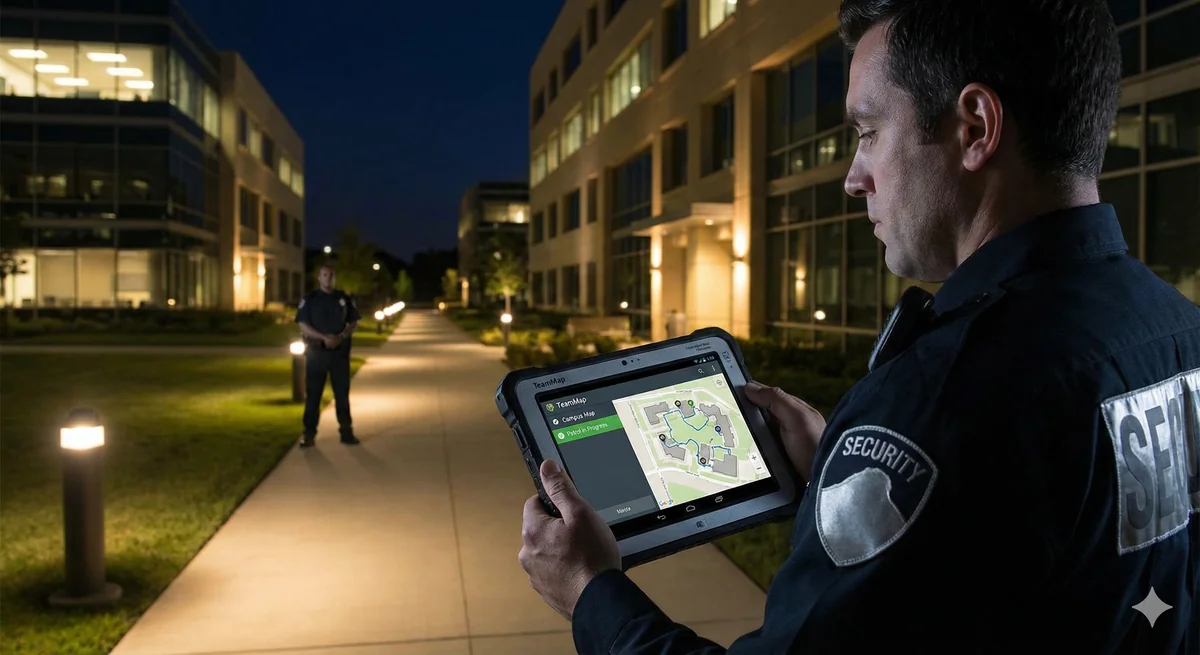
Technology creates verifiable accountability that cheaper competitors can't match. GPS-verified patrols prove guards actually walked their routes. Digital incident reports with timestamps and photos document activities professionally. Client portals provide real-time visibility that builds confidence. These capabilities justify higher prices because they deliver tangible value.
The Courage to Walk Away
Not every contract is worth winning. Some business is better left to competitors who haven't done the math on their actual costs. Knowing when to decline opportunities protects your company from deals that look like wins but feel like losses.
Contracts priced below your cost-plus-minimum-margin are obvious declines. But you also need to factor in opportunity cost—taking an unprofitable contract means your limited resources aren't available for profitable work that might come along.
High-risk clients deserve extra scrutiny. Clients who don't pay on time create cash flow problems that ripple through your operation. Clients with unrealistic expectations generate complaints, administrative overhead, and guard turnover. Sites with safety issues expose you to workers' compensation claims. Sometimes the right price for difficult clients is "no thank you."
Key Takeaways
- True costs include burden (25-35% of wages) and overhead—not just guard pay
- Bill rates should be minimum 1.4x pay rates; 1.5-1.6x provides healthier margins
- Adjust pricing for service type, timing, location, and risk level
- Compete on value—reliability, professionalism, technology—not lowest price
- Unprofitable contracts are worse than no contracts—have the courage to walk away
- Never go below 1.4x pay rate as your bill rate floor—below that you are losing money once burden, overhead, and margin are factored in
Continue Reading

Video Analytics for Security: Beyond Basic Surveillance
AI-powered video analytics can detect intrusions, count people, and identify anomalies. This guide covers practical applications and integration strategies.
Florida Security Guard License Application: Division of Licensing Guide
Navigate the Florida Division of Licensing application process for security guards, including background checks, training providers, and processing timelines.

The 10 Best Security Guard Management Software Solutions in 2026
From enterprise platforms to mobile-first apps, we review the top security guard software options. Honest assessments of features, pricing, and who each solution works best for.