Emergency Response Quick Reference: Decision Trees for Common Incidents
When seconds count, guards need clear decision trees. This quick reference covers medical emergencies, fires, active threats, suspicious packages, and more.

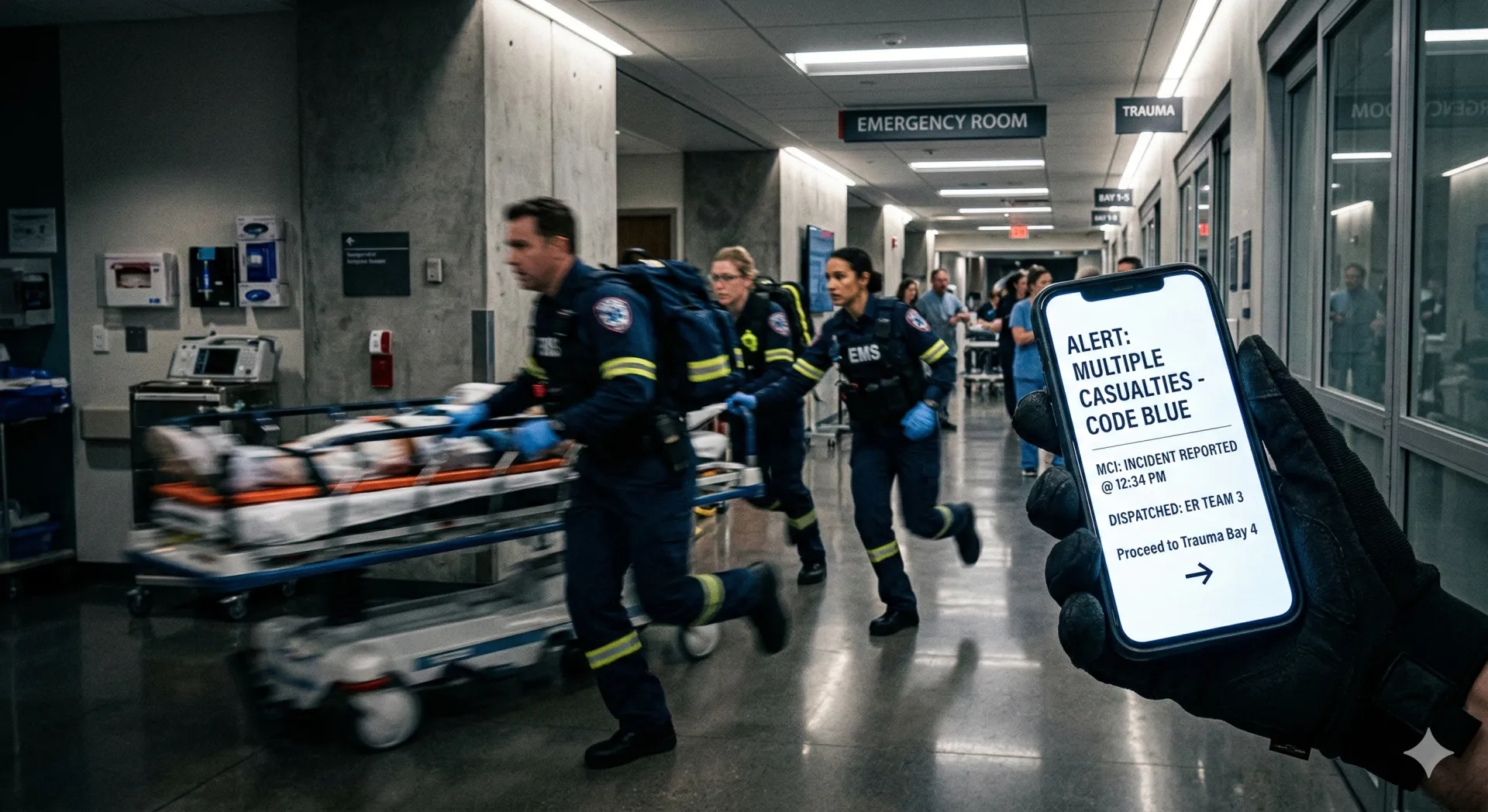
In an emergency, there's no time to flip through a manual. This quick reference provides decision trees for the most common security emergencies—from medical situations to active threats. Print it, laminate it, keep it accessible.
Every emergency follows a pattern: Assess safety, call for help, take immediate action, secure the scene, and document. These decision trees provide step-by-step guidance for medical emergencies, fires, threats, and more.
Universal Emergency Protocol
For ANY Emergency:
- ASSESS - Is the scene safe for you to approach?
- CALL - Notify dispatch/911 (don't assume someone else did)
- ACT - Take appropriate immediate action
- SECURE - Control access to the scene
- DOCUMENT - Record everything as soon as possible
Medical Emergency
Decision Tree
Is the person conscious?
- YES → Ask "Are you okay? What happened?"
- NO → Check for breathing. Call 911 immediately.
Is the person breathing?
- YES → Place in recovery position if unconscious. Monitor until EMS arrives.
- NO → Begin CPR if trained. Send someone to get AED.
Is there severe bleeding?
- YES → Apply direct pressure with clean cloth. Elevate if possible. Do NOT remove object if impaled.
- NO → Keep person still and calm. Do not move unless in immediate danger.
Actions
- Call 911 (or have someone call while you assist)
- Notify dispatch/supervisor
- Do NOT move the person unless they're in immediate danger
- Send someone to meet EMS at the entrance
- Clear a path for stretcher access
- Gather information: name, what happened, medical conditions if known
- Stay with the person until EMS takes over
Fire / Smoke
Decision Tree
Do you see flames or just smell smoke?
- FLAMES → Pull fire alarm. Call 911. Evacuate area immediately.
- SMOKE ONLY → Investigate source cautiously. If fire confirmed, treat as flames.
Is the fire small and contained?
- YES (trash can size) → Use extinguisher ONLY if trained and safe. Have exit behind you.
- NO (spreading or large) → Evacuate. Do NOT attempt to fight. Close doors behind you.
Is anyone trapped?
- YES → Note location. Inform fire department. Do NOT re-enter building.
- NO → Account for all personnel at assembly point.
RACE Protocol
- R - Rescue: Remove anyone in immediate danger (only if safe)
- A - Alarm: Pull fire alarm, call 911
- C - Contain: Close doors to limit fire spread
- E - Extinguish/Evacuate: Fight small fires or evacuate
Fire Extinguisher: PASS
- P - Pull the pin
- A - Aim at base of fire
- S - Squeeze the handle
- S - Sweep side to side
Active Threat / Active Shooter
RUN - HIDE - FIGHT
RUN (First Choice)
- Have an escape route in mind
- Leave belongings behind
- Help others evacuate if possible
- Prevent others from entering danger zone
- Call 911 when safe
HIDE (If escape not possible)
- Find a room that locks
- Barricade door with heavy furniture
- Turn off lights, silence phone
- Stay away from doors and windows
- Remain quiet and hidden
FIGHT (Last resort only)
- Commit fully—your life depends on it
- Use improvised weapons (fire extinguisher, chair)
- Work as a team if others present
- Aim to incapacitate
When Law Enforcement Arrives
- Drop anything in your hands
- Raise hands, spread fingers
- Follow all commands
- Do NOT grab officers or ask for help while they're clearing
- Evacuate in the direction they indicate
Suspicious Package
Signs of a Suspicious Package
- No return address or fictitious return address
- Excessive postage or hand-delivered
- Misspelled words, generic addressee ("Occupant")
- Oily stains, strange odor, or discoloration
- Rigid, lopsided, or oddly shaped
- Wires, string, or tape holding it closed
- Ticking sound or visible powder
Actions
- DO NOT touch, open, shake, or move the item
- Clear the immediate area (minimum 50 feet, more for large packages)
- Call 911 and notify dispatch
- Do NOT use radio near the package (radio waves could trigger device)
- Note who found it and when
- Wait for bomb squad/law enforcement
Bomb Threat (Phone Call)
If You Receive the Call
- Stay calm—keep the caller talking
- Signal a coworker to call 911
- Write down exactly what they say
- Ask: "Where is the bomb?" "When will it explode?" "What does it look like?"
- Note voice characteristics, background noises
- Do NOT hang up first—let them disconnect
- Check caller ID, preserve the line if possible
Evacuation Decision
Evacuation decisions are made by management/law enforcement—not security alone. However, if a credible, imminent threat is identified, evacuate immediately.
Trespasser / Unwanted Person
Approach Protocol
- Approach from a safe distance, maintain exit route
- "Hello, I'm [Name] with security. Can I help you?"
- Ask purpose of visit and for identification
- Verify against visitor list or call host
If Person Refuses to Leave
- Clearly state: "You are on private property. I'm asking you to leave."
- Document the request was made
- If they still refuse: "If you don't leave, I will call the police to assist you in leaving."
- Call police non-emergency (or 911 if threatening)
- Maintain safe distance, do NOT physically remove
- Observe and document until police arrive
Power Outage
Immediate Actions
- Use flashlight—do NOT use open flames
- Check if emergency lighting activated
- Radio dispatch to confirm scope (building or area-wide)
- Check that generator started (if applicable)
- Begin patrol to check for trapped persons (elevators)
- Secure areas that rely on electronic locks
- Monitor for alarms—some may have battery backup
Elevator Entrapment
Actions
- Use elevator intercom to communicate with occupants
- Reassure them—help is on the way
- Ask: How many people? Any medical conditions?
- Call elevator service company (posted in elevator room)
- Do NOT attempt to pry doors open
- Do NOT instruct occupants to exit through hatch
- If medical emergency inside, call 911
Natural Disaster
Earthquake
- During: Drop, Cover, Hold On. Stay away from windows.
- After: Check for injuries. Check for gas leaks, fires. Evacuate if structural damage.
Tornado Warning
- Move to interior rooms, lowest floor
- Stay away from windows, doors, outside walls
- Protect head and neck
- Do NOT try to evacuate by vehicle
Flooding
- Do NOT walk through flowing water
- Move to higher ground
- Stay away from electrical equipment
- Be aware of contaminated water
Chemical Spill / Hazmat
- Do NOT touch, walk through, or inhale fumes
- If outdoors, move upwind and uphill
- If indoors, exit building if safe; otherwise shelter in place
- Call 911—identify substance if known (check SDS sheets)
- Keep others away from affected area
- If exposed, remove contaminated clothing, rinse skin with water
Key Takeaways
- Safety first—assess before you act
- Call 911 early—don't assume someone else will
- Know your facility's specific emergency procedures
- Practice these scenarios so responses are automatic
- Document everything as soon as it's safe to do so
Continue Reading

Video Analytics for Security: Beyond Basic Surveillance
AI-powered video analytics can detect intrusions, count people, and identify anomalies. This guide covers practical applications and integration strategies.
Florida Security Guard License Application: Division of Licensing Guide
Navigate the Florida Division of Licensing application process for security guards, including background checks, training providers, and processing timelines.

The 10 Best Security Guard Management Software Solutions in 2026
From enterprise platforms to mobile-first apps, we review the top security guard software options. Honest assessments of features, pricing, and who each solution works best for.