Drones in Security: Use Cases, Regulations, and ROI
Drones are transforming perimeter security and incident response. This guide covers practical applications, FAA regulations, and calculating return on investment.

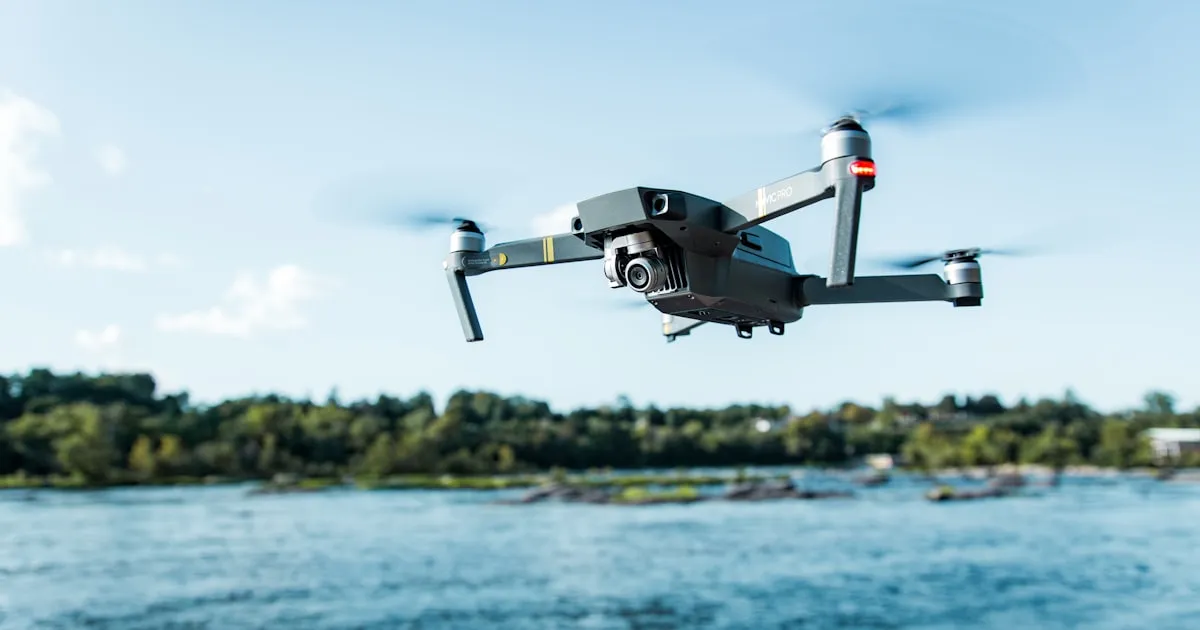
Drones have moved from novelty to practical security tool, offering perspectives and capabilities that ground-based security simply cannot match. An aerial view covers in seconds what takes a guard minutes to patrol on foot. Thermal cameras spot intruders at night that would be invisible to human eyes. Rapid deployment to alarm locations provides assessment before response teams arrive. But standing up a drone program means working through FAA rules, privacy law, and the day-to-day operational load that makes drones harder than they look.
Drones offer significant security benefits for perimeter monitoring, incident response, and large-area coverage. However, FAA regulations, privacy laws, and operational complexity require careful planning before implementation.
Where Drones Add Security Value
Not every security operation benefits from drones, but certain use cases demonstrate clear value that justifies the investment and complexity.
Perimeter monitoring transforms with aerial capability. A drone can patrol an entire fence line in minutes, covering ground that would take a guard an hour on foot. Large properties that would require multiple guards for complete coverage can be monitored by a single drone. Thermal imaging detects intruders at night when visual detection is impossible. Areas that are difficult or dangerous to access on foot—rough terrain, water barriers, construction zones—become easily observable from the air. The visible presence of drone surveillance also provides deterrent effect.
Incident response benefits from speed and perspective that ground-based response cannot match. A drone can reach any point on a property in seconds, providing rapid assessment of situations before guards arrive. Suspects leaving a scene can be tracked from above, maintaining visual contact while coordinating with ground response. Search operations for missing persons cover vast areas quickly. Post-incident damage assessment captures comprehensive documentation. During active incidents, drones provide real-time intelligence that supports ground responders making tactical decisions.
Inspection and monitoring applications extend beyond traditional security. Roof and building inspections that previously required scaffolding or lifts can be conducted safely from the air. Construction site progress monitoring provides documentation without disrupting work. Large events benefit from aerial crowd monitoring that identifies developing situations. Critical infrastructure inspection—solar farms, pipelines, transmission lines—becomes routine rather than expeditionary.
Working Within FAA Regulations
Commercial drone operations in the United States require compliance with FAA Part 107 regulations. Ignoring these rules creates legal liability and potential criminal exposure that no security benefit justifies.
The foundation is pilot certification. Anyone operating a drone for commercial purposes must hold a Remote Pilot Certificate, obtained by passing an FAA knowledge exam covering airspace, weather, operations, and regulations. Every drone used commercially must be registered with the FAA. Operations must stay below 400 feet above ground level. Standard Part 107 operations are limited to daylight hours, though waivers can extend this. The pilot must maintain visual line of sight with the drone at all times under standard rules. Drones must yield right of way to all manned aircraft. Flight over people who aren't participating in the operation requires a waiver.
Waivers extend capabilities beyond standard Part 107 limitations. Night operations waivers allow the most useful security applications since much of security work happens after dark. Beyond visual line of sight waivers enable extended-range operations. Operations over people waivers permit flights that would otherwise be prohibited. Higher altitude authorizations address specific operational needs. Multiple drone per pilot authorizations support larger operations. Each waiver requires demonstrating that proposed operations can be conducted safely despite exceeding standard limitations.
Airspace restrictions add another layer of compliance. Controlled airspace near airports requires authorization through the LAANC system or individual airspace authorizations. Permanent no-fly zones around airports, federal buildings, and other sensitive locations prohibit operations entirely. Temporary flight restrictions for events, emergencies, or VIP movements must be checked before every flight. Failure to comply with airspace restrictions can result in certificate suspension, fines, and criminal charges.
Managing Privacy and Legal Concerns
Drones with cameras create privacy implications that security operations must address proactively. Legal requirements vary by jurisdiction, but best practices apply universally.
Privacy laws governing aerial surveillance are still evolving, but certain principles are clear. Surveillance over private property you don't control raises legal concerns even if technically possible from legally flown airspace. Recording people without consent may violate state privacy laws depending on context and jurisdiction. Some states have specific drone privacy laws beyond general privacy protections. Audio recording from drones may trigger wiretapping laws that are stricter than video recording laws. People retain reasonable expectations of privacy even in spaces visible from above—the law hasn't fully caught up with drone capabilities.
Best practices reduce legal exposure while maintaining operational effectiveness. Obtain written authorization from property owners explicitly permitting drone surveillance over their property. Establish clear policies governing footage use, retention, and deletion. Configure flight paths and camera angles to avoid capturing adjacent properties not covered by authorization. Post signage notifying visitors that drone surveillance is in use. Implement data security measures protecting recorded footage from unauthorized access or disclosure.
Selecting and Maintaining Equipment
Drone selection involves balancing capabilities against cost, with the right choice depending on your specific operational requirements.
Key capability considerations include flight time—typically 20-40 minutes for most commercial drones, which limits continuous operation time. Camera quality matters enormously: 4K resolution for detail, optical zoom for distance observation, thermal imaging for night operations. Range and signal reliability determine how far from the pilot the drone can operate effectively. Weather resistance varies dramatically between models—security operations can't stop for light rain if your equipment can't handle moisture. Obstacle avoidance prevents crashes in complex environments. Return-to-home capability brings the drone back safely if signal is lost.
Price points range from accessible to enterprise investment. Entry-level drones in the $1,000-$2,500 range can handle basic applications but lack advanced features. Professional-grade equipment in the $2,500-$10,000 range provides thermal imaging, extended range, and reliability needed for serious security operations. Enterprise systems exceeding $10,000 offer maximum capability but require corresponding investment in training and maintenance. Autonomous systems with docking stations and automated operations represent the highest tier of investment.
Operational requirements include FAA-certified pilots for every flight—no exceptions for commercial security operations. Training must cover both general drone operations and your specific equipment. Practice requirements maintain proficiency between operational deployments. Some operations require visual observers in addition to pilots. Maintenance demands include pre-flight inspection checklists for every flight, battery management and replacement programs, firmware updates and calibration procedures, and repair and replacement planning for inevitable equipment failures.
Autonomous and Emerging Systems
The frontier of security drone operations is autonomous systems that operate with minimal human intervention—launching from automated docking stations, flying pre-programmed patrol routes, responding to alarm triggers automatically, returning to charge, and launching again without human hands touching the equipment.
These systems are evolving rapidly but currently require significant investment beyond the equipment itself, including site infrastructure and ongoing service contracts. Additional regulatory requirements may apply to autonomous operations. The technology is promising but not yet mature for most security applications.
Autonomous drone systems are evolving rapidly, with new capabilities and new regulatory frameworks emerging regularly. Companies considering this technology should monitor developments closely while ensuring any current operations comply with existing regulations.
Key Takeaways
- Drones offer unique aerial capabilities for perimeter monitoring and incident response
- FAA Part 107 certification is mandatory for all commercial drone operations
- Privacy laws and property owner authorization are essential compliance elements
- Plan for ongoing pilot training, equipment maintenance, and regulatory compliance
- Start with clear use cases that demonstrate value justifying the investment
Continue Reading
Video Analytics for Security: Beyond Basic Surveillance
AI-powered video analytics can detect intrusions, count people, and identify anomalies. This guide covers practical applications and integration strategies.
Florida Security Guard License Application: Division of Licensing Guide
Navigate the Florida Division of Licensing application process for security guards, including background checks, training providers, and processing timelines.

The 10 Best Security Guard Management Software Solutions in 2026
From enterprise platforms to mobile-first apps, we review the top security guard software options. Honest assessments of features, pricing, and who each solution works best for.